

Writing a great book or building a great product is only half the journey. The other half is making sure the right people know it exists. For most authors and small brands today, social media is the most affordable and direct way to do that. The problem is that many people post randomly, see little response, and give up. A clear plan changes everything.
In this guide, we share the same approach our Creative Services team uses when we build social media strategies for authors and growing businesses.
1. Choose the right platforms, not every platform
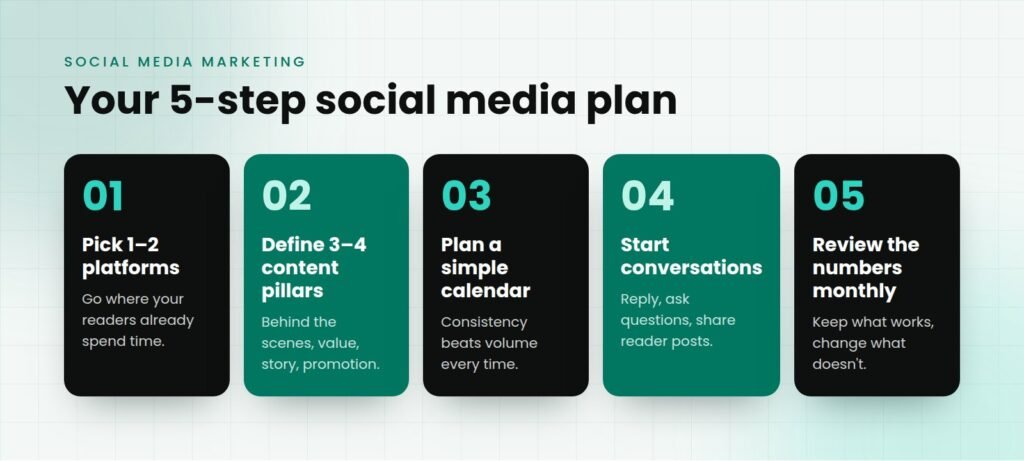
You don’t need to be everywhere. Trying to post on six platforms usually means doing all of them poorly. Instead, choose one or two platforms where your ideal readers or customers already spend their time:
- Instagram works well for visual storytelling, book aesthetics, quotes and behind-the-scenes moments.
- TikTok is powerful for short, personal videos and for reaching new readers through communities like BookTok.
- Facebook is still strong for groups, events and connecting with an older, loyal audience.
- LinkedIn is ideal for non-fiction authors, consultants and business books.
Once you have built a steady rhythm on one or two channels, you can expand.
2. Build your content around clear pillars
Content pillars are the three or four themes you post about again and again. They make planning easier and help people understand what you stand for. A simple mix for an author might be:
- Behind the scenes: your writing process, your desk, your research, your cover reveal.
- Value: tips, lessons or insights connected to your book’s topic or genre.
- Story: characters, settings, favourite lines and the “why” behind your work.
- Promotion: launches, offers, events, reviews and where to buy.
A good rule of thumb is to keep promotion to a small part of what you share. When most of your posts give people something useful or interesting, they are much happier to hear about your book when it matters.
3. Plan a simple, realistic content calendar
Consistency matters far more than volume. Posting three times a week, every week, will do more for your growth than posting every day for a fortnight and then disappearing for a month. Plan your posts a week or a month ahead, batch-create graphics and captions, and use a scheduling tool so your pages stay active even on busy days.
4. Treat social media as a conversation
The word “social” is the most important part of social media. Reply to comments, answer messages, ask your audience questions and share posts from readers who mention your work. These small interactions build real relationships, and platforms tend to show your content to more people when it sparks conversation.
5. Use short video and eye-catching visuals
Short videos, reels and carousels are some of the best ways to stop the scroll. You don’t need a film crew: a phone, good natural light and a clear message are enough to start. Book trailers, quick tips, “day in the life” clips and reading snippets all work well. Pair them with clean, on-brand graphics so your feed looks professional and recognisable.
6. Measure what matters and improve
Once a month, look at which posts reached the most people, which ones got the most saves, shares and comments, and which ones led to clicks on your website or book link. Do more of what works and adjust or drop what doesn’t. Over time, these small improvements add up to steady, reliable growth.
Need a hand?
Growing an audience takes time, creativity and consistency. If you would rather focus on writing or running your business, our team can plan your strategy, create your content, manage your pages and report on your results each month. Explore our Creative Services or contact us to talk about your goals.